
Tree Care & Storm Preparation | North Texas
Preparing Your Trees for Strong Winds Starts Long Before the Storm
Strong winds don't always create tree problems. Sometimes, they expose problems that were already there.
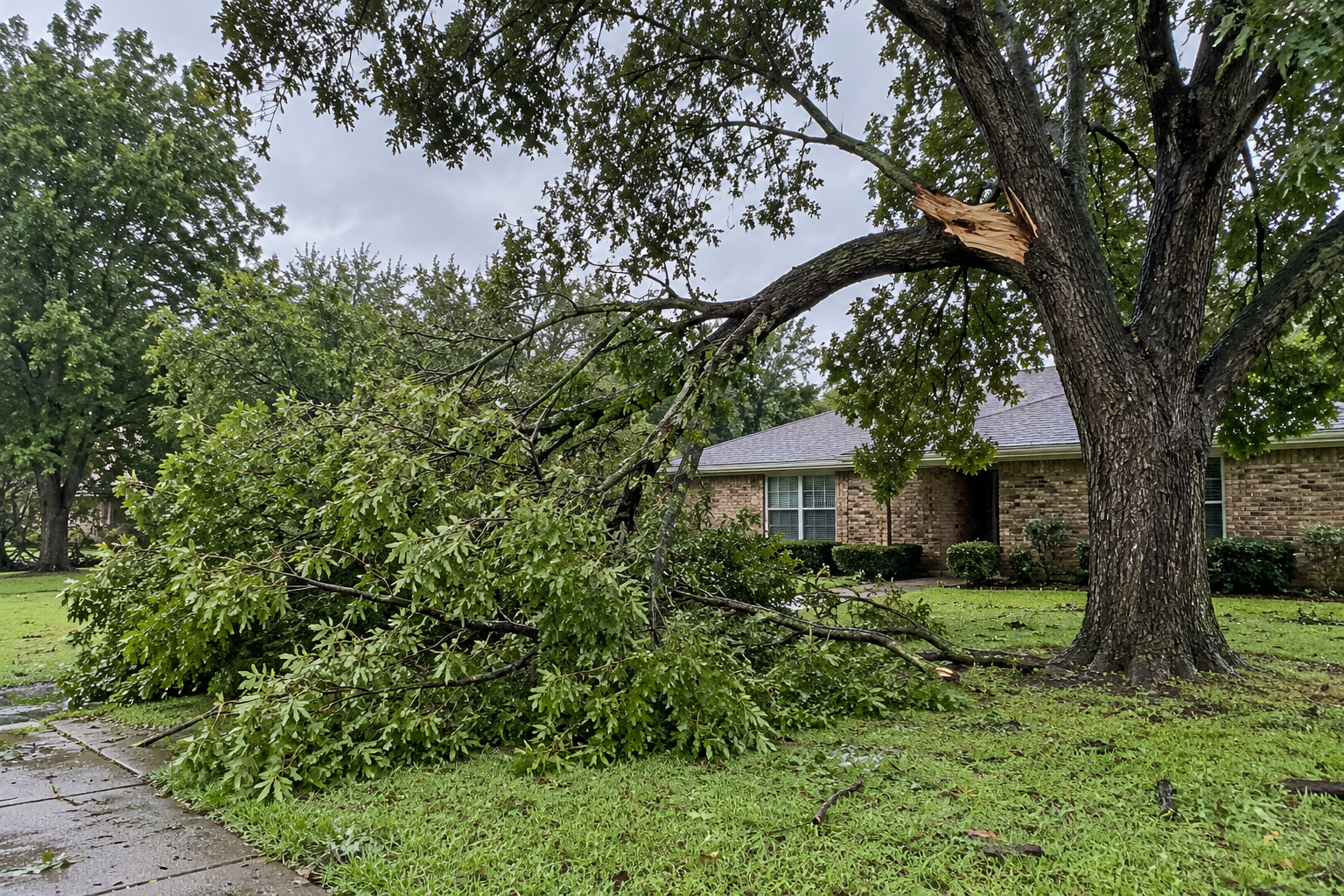
North Texas homeowners know how quickly the weather can change. A calm afternoon can give way to strong winds, thunderstorms, and conditions that put mature trees under significant stress.
When severe weather approaches, most homeowners focus on securing outdoor furniture, checking gutters, and preparing their homes. But what about the trees surrounding their property?
Dead branches, cracked limbs, weak branch attachments, and structural defects may already exist long before a storm develops.
At Plano Tree Care, Inc., we believe preparing trees for strong winds begins with understanding their condition—not waiting until severe weather is in the forecast.
Why Strong Winds Can Expose Existing Tree Problems
Trees naturally move with the wind. Branch flexibility and tree structure help distribute the forces created by normal weather conditions. However, not every tree has the same structural integrity.
Age, previous storm damage, improper pruning, decay, and natural growth patterns can contribute to weaknesses that become more significant under wind loads.
Some concerns are visible from the ground. Others require a closer professional evaluation.
Common Conditions Worth Evaluating
- Dead or dying branches: These may be more likely to break when exposed to strong winds.
- Cracked or damaged limbs: Existing fractures can worsen under additional stress.
- Weak branch attachments: Certain branch unions, particularly those with included bark, may have reduced structural strength.
- Overextended branches: Long or heavily weighted limbs may place additional stress on their attachments.
- Decay or cavities: Internal deterioration may compromise structural strength, depending on its location and extent.
- Root and soil concerns: Compromised root systems and saturated soils can contribute to instability during severe weather.
The International Society of Arboriculture (ISA) explains that recognizing tree defects and understanding their potential consequences are important parts of managing tree risk.
Not every visible defect indicates an immediate danger. Evaluating its significance requires considering the entire tree, its surroundings, and what could be affected if a branch or tree were to fail.
Why Professional Tree Assessments Matter
One of the most common misconceptions about tree care is that a tree only needs attention when something looks wrong.
A full, green canopy doesn't necessarily mean a tree is structurally sound.
Professional tree assessments can help identify visible concerns that might otherwise go unnoticed and provide homeowners with a better understanding of their trees' condition.
An assessment may include evaluating:
- Overall tree condition and visible structure
- Dead, damaged, or defective branches
- Branch attachments and growth patterns
- Visible trunk defects and signs of decay
- Root flare and surrounding soil conditions
- Proximity to homes, driveways, sidewalks, and other structures
- Previous pruning practices and their effects on tree structure
The objective isn't simply to identify potential problems. It's to determine what the findings mean and whether corrective action is appropriate.
An assessment doesn't automatically mean a tree needs pruning or removal. Sometimes the best recommendation is continued monitoring.
Other situations may require selective pruning, additional investigation, or consideration of tree removal when the risk cannot be adequately managed.
The right decision begins with understanding the tree—not simply recommending work.
Selective Pruning: Every Cut Should Have a Purpose
When structural concerns are identified, selective pruning may be an appropriate part of a preventative tree care plan.
But proper pruning isn't about removing as many branches as possible. It's about making targeted decisions that address specific objectives while preserving the tree's natural structure and long-term health.
Depending on the tree's condition, selective pruning may involve:
- Removing dead, broken, or defective branches
- Reducing the length or weight of certain overextended limbs
- Addressing competing or poorly attached branches when appropriate
- Improving clearance around structures and pedestrian areas
- Supporting better structural development in younger trees
Excessive canopy removal, topping, and indiscriminate thinning can create additional problems, including undesirable regrowth and long-term structural weaknesses.
As explained in Penn State Extension's guide to pruning landscape trees, proper pruning techniques and clearly defined objectives are important to maintaining structural strength and tree health.
A tree's species, age, health, existing structure, and pruning history should influence the recommended approach.
Learn more about how Plano Tree Care approaches professional tree pruning and trimming in Plano and North Texas.
Every cut should have a clear purpose, and every recommendation should consider the tree's future.
Can Pruning Make a Tree Storm-Proof?
No. Even healthy, properly maintained trees can experience damage during extreme weather.
High winds, saturated soils, lightning, and other severe conditions can cause branches or entire trees to fail without obvious warning signs.
Professional tree care cannot eliminate every risk.
What proactive maintenance can do is help identify and address certain conditions that may increase the likelihood or consequences of tree failure.
The ISA's Storm-Related Tree Damage guide emphasizes that while storm damage cannot be entirely prevented, preventative tree care can help identify and manage structural concerns.
The goal isn't to promise that a tree will survive every storm. The goal is to make informed maintenance decisions that support tree health, structural integrity, and responsible risk reduction.
Tree Maintenance Shouldn't Be Seasonal Guesswork
Homeowners often think about tree care immediately before severe weather or after storm damage has occurred.
But preventative maintenance should be an ongoing consideration.
Trees change over time. Branches grow, environmental conditions shift, and previous injuries or defects may become more significant.
Regular professional assessments, along with evaluations after major storms or noticeable changes, can help homeowners identify concerns before they develop into more complicated situations.
The appropriate assessment interval depends on the tree's condition, location, and surrounding property.
A mature tree extending over a home, driveway, or frequently used outdoor space may warrant closer attention than a similar tree in an open area.
For homeowners throughout Plano, Allen, Frisco, McKinney, and surrounding North Texas communities, incorporating tree assessments into routine property maintenance is a practical approach to responsible tree ownership.
What Should Homeowners Look for Between Assessments?
While professional evaluations are important, homeowners can remain observant between scheduled visits.
Pay attention to changes such as:
- Newly broken or hanging branches
- Developing cracks in limbs or trunks
- Noticeable changes in a tree's lean
- Soil lifting or movement near the tree's base
- Newly visible decay or damage to major limbs
- Significant changes following severe weather
These observations do not establish whether a tree is safe or unsafe, but they can indicate when professional evaluation is warranted.
Avoid climbing trees, cutting large limbs, or attempting to correct suspected structural defects yourself. Damaged branches and compromised trees can present serious hazards, especially near buildings and electrical lines.
If a tree or branch contacts a power line, stay clear and contact the utility provider. Never attempt to remove it yourself.
If severe weather has already caused damage, review our storm-damage tree services and safety guidance before taking action.
The Best Time to Prepare Is Before the Forecast Changes
Strong winds are a recurring part of life in North Texas.
While homeowners cannot control the weather, they can take a proactive approach to understanding and maintaining the trees surrounding their property.
A professional assessment can help identify visible concerns, explain their significance, and determine whether appropriate maintenance could reduce certain risks.
At Plano Tree Care, Inc., our approach follows four important steps:
Assess
Evaluate tree condition, structure, and surrounding property conditions.
Diagnose
Identify visible defects and determine which concerns may require attention.
Educate
Explain findings, recommendations, and available options to the homeowner.
Execute
Perform appropriate work when needed, with a clear objective behind every cut.
We believe homeowners should understand not only what work is recommended, but why it matters.
Make professional tree assessments part of your preventative property maintenance, even when everything appears healthy.
Schedule a Professional Tree Assessment
Plano Tree Care, Inc. has served North Texas homeowners for over 30 years, providing professional tree pruning, removal, plant health care, and storm-related services.
Whether you're concerned about a particular tree or want to better understand the condition of your property's trees, our team can help evaluate your options.