Plano Tree Care | Project Spotlight
Not every city tree clearance issue requires a major pruning project. Sometimes, the most cost-effective solution begins with understanding exactly what the city requires.
When a property has trees extending over public streets or sidewalks, meeting municipal clearance requirements becomes a priority. But correcting the problem shouldn't automatically mean paying for extensive pruning the trees don't actually need.
A recent Plano Tree Care project demonstrated how a focused assessment, clear understanding of the required work, and precise execution can help property owners satisfy clearance requirements while controlling costs.
The Project at a Glance
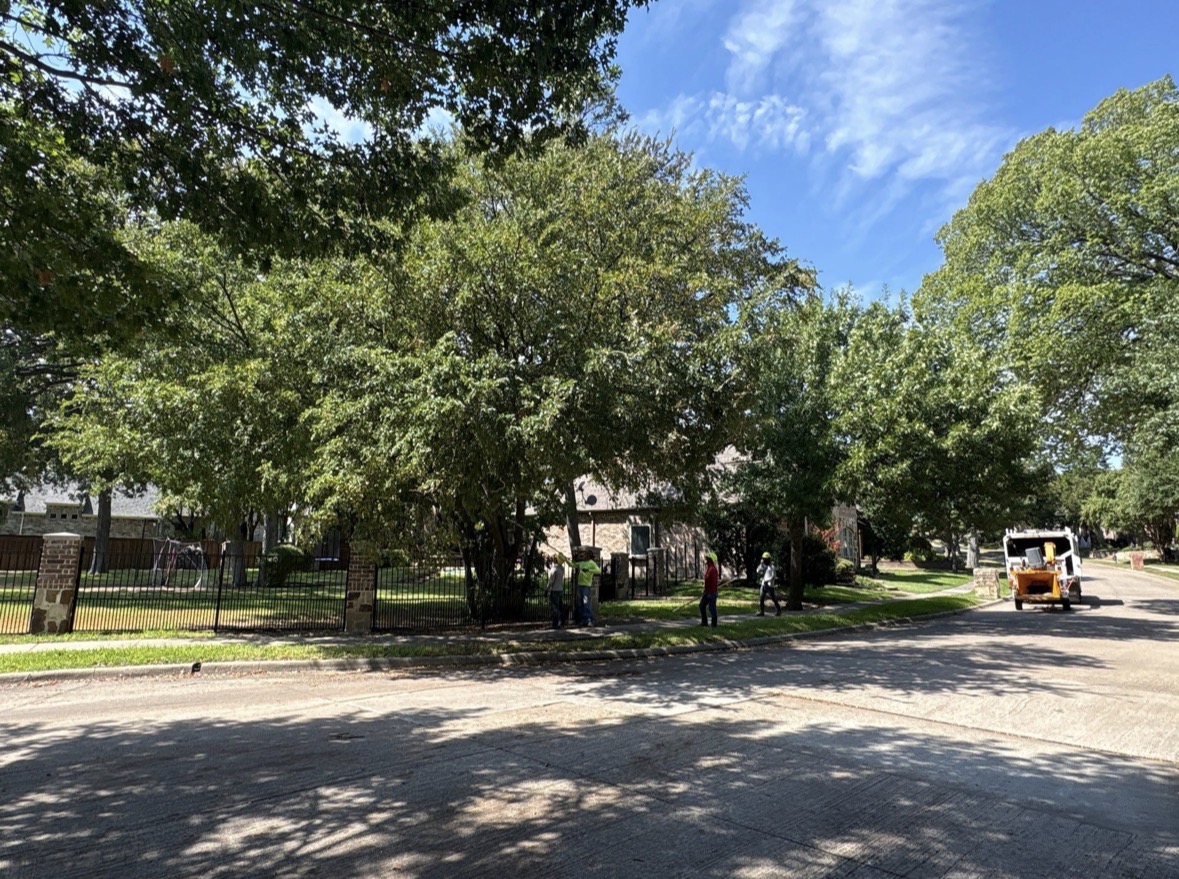
Tree branches extending into street and sidewalk areas requiring municipal clearance.
Evaluate the requirements, measure the clearance, and selectively prune only the necessary limbs.
Required clearance addressed, unnecessary pruning avoided, and work completed within the customer's budget.
The Real Problem Was Compliance, Not the Entire Tree
The project involved trees with branches extending over a public street and adjacent sidewalk.
The city required specific clearance in those areas. The customer's objective was to meet the requirement without turning a limited problem into a larger and more expensive tree maintenance project.
That distinction is important.
A clearance issue doesn't necessarily mean every tree needs a full canopy reduction, extensive trimming, or a comprehensive pruning program.
It means the property must satisfy the applicable clearance requirements. The appropriate scope of work depends on what is actually creating the problem.
The job wasn't about how much tree work could be performed. It was about determining how much work was actually necessary to satisfy the requirement.
Understanding the City's Requirements Before Starting Work
Municipal tree clearance requirements can vary depending on the city, the location of the tree, and whether branches extend over a roadway, sidewalk, or other public access area.
The first priority is understanding which standard applies.
For this project, our crew evaluated the trees, measured the clearance concerns, and identified the limbs interfering with the required space.
That information helped establish a clearly defined work scope focused on the actual compliance issue.
Rather than recommending broad pruning throughout the canopy, the work could concentrate on the specific branches preventing the property from meeting the required clearance.
A Defined Scope Helps Control Costs
One of the most important parts of this project was respecting the customer's budget.
Tree care costs can increase when the scope of work expands beyond the original problem.
A property owner who needs roadway clearance may not need an extensive pruning program across the entire property.
By defining the work before starting, our team could focus its effort on the branches requiring attention.
The project was completed within the customer's budget without expanding the work into unnecessary pruning.
This doesn't mean that every clearance project will be small or inexpensive. Some situations involve larger limbs, difficult access, structural concerns, or additional safety considerations.
It does mean that an accurate assessment is an important first step toward understanding the work and its cost.
The Right Solution Doesn't Always Require More Work
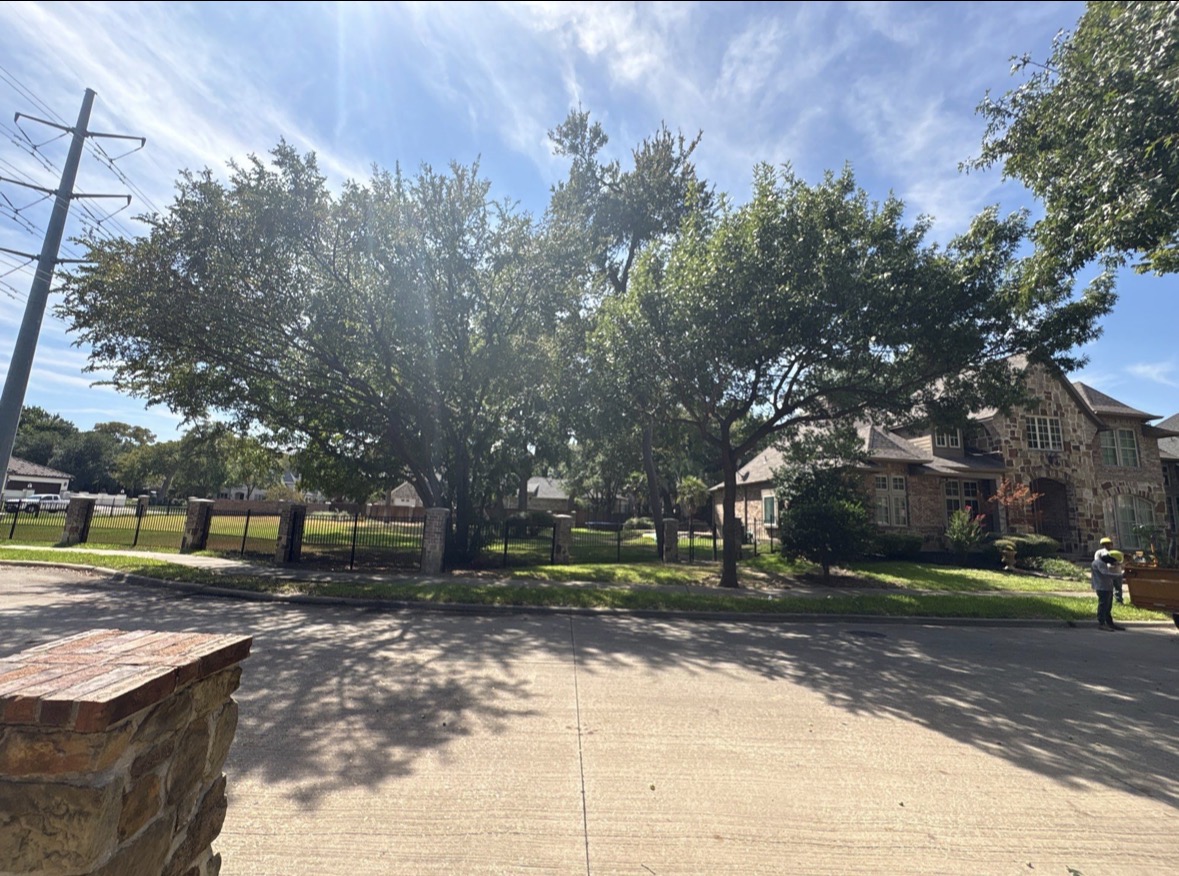
Once the required clearance was identified, the crew performed targeted pruning on the problem limbs.
The remaining canopy was preserved rather than being subjected to unnecessary additional cuts.
That approach helped address the municipal clearance requirements while keeping the job focused and within the agreed budget.
Sometimes the best tree care is knowing what NOT to cut.
Good tree care should be based on the condition of the trees and the objectives of the property owner.
The solution should fit the problem. Not the other way around.
What Should You Do If You Receive a City Tree Clearance Notice?
Receiving a municipal notice about overhanging branches doesn't necessarily mean an extensive tree service project is required.
Before authorizing work, property owners and managers should take several practical steps.
- Review the notice carefully. Identify the city issuing it, the location of the violation, the required corrective action, and any stated deadline.
- Understand the clearance standard. Requirements may differ for sidewalks, public streets, and other access areas.
- Request a professional assessment. Have the affected trees evaluated to determine which branches are actually creating the issue.
- Establish a clear scope of work. Make sure the proposed pruning addresses the identified problem without automatically including unnecessary additional services.
- Document the completed work. Keep the applicable notice, work details, and photographs for your records. Confirm any required follow-up with the city.
A professional assessment can help turn an unfamiliar code requirement into a practical action plan.
Why This Matters for Commercial Properties and HOAs
City clearance requirements aren't limited to individual homeowners.
Commercial property managers, homeowners associations, apartment communities, office properties, retail centers, and other managed landscapes often have trees bordering public streets, sidewalks, and access routes.
Maintaining these areas is part of responsible property management.
Clearance problems can lead to unexpected service calls, scheduling disruptions, potential code penalties, and unplanned expenses.
A proactive maintenance plan can help managers identify concerns before they become urgent corrective projects.
Just as importantly, a clearly defined scope allows property managers to better understand what they're paying for and why.
A Small Clearance Issue Today Can Become a Bigger Expense Tomorrow
Tree growth doesn't stop once clearance work has been completed.
Branches can continue extending toward roads, sidewalks, and other public spaces.
Periodic reviews can help property owners identify new clearance concerns while they may still be relatively straightforward to address.
An annual assessment is a practical starting point for many properties, although the appropriate frequency depends on tree growth, site conditions, and municipal requirements.
Addressing developing problems early may help prevent a smaller maintenance expense from becoming a larger one.
Professional Tree Care Is About Making the Right Recommendation
Plano Tree Care has served North Texas for more than 30 years, helping residential and commercial customers manage their trees.
That experience matters when deciding how much work is appropriate.
Not every property needs the same recommendation.
Some trees require more comprehensive attention because of their condition, structure, or surrounding environment.
Others may require only a few targeted cuts to address a specific clearance problem.
This project demonstrates the value of identifying the real issue, building an appropriate scope, and completing the work without unnecessary expense.
The best recommendation isn't always the biggest job. It's the right job.
Received a City Tree Clearance Notice?
Or manage a property where trees are beginning to interfere with streets and sidewalks?
Plano Tree Care can evaluate the situation, help identify the applicable clearance requirements, and recommend work appropriate for your property.
Let's determine what actually needs to be done before the project becomes more than it needs to be.