
Why Are My Trees Losing Leaves? Fall Changes vs. Tree Stress in North Texas
Leaves are falling across North Texas, and your tree may be looking a little thin. Is it simply responding to the season—or showing signs of stress?
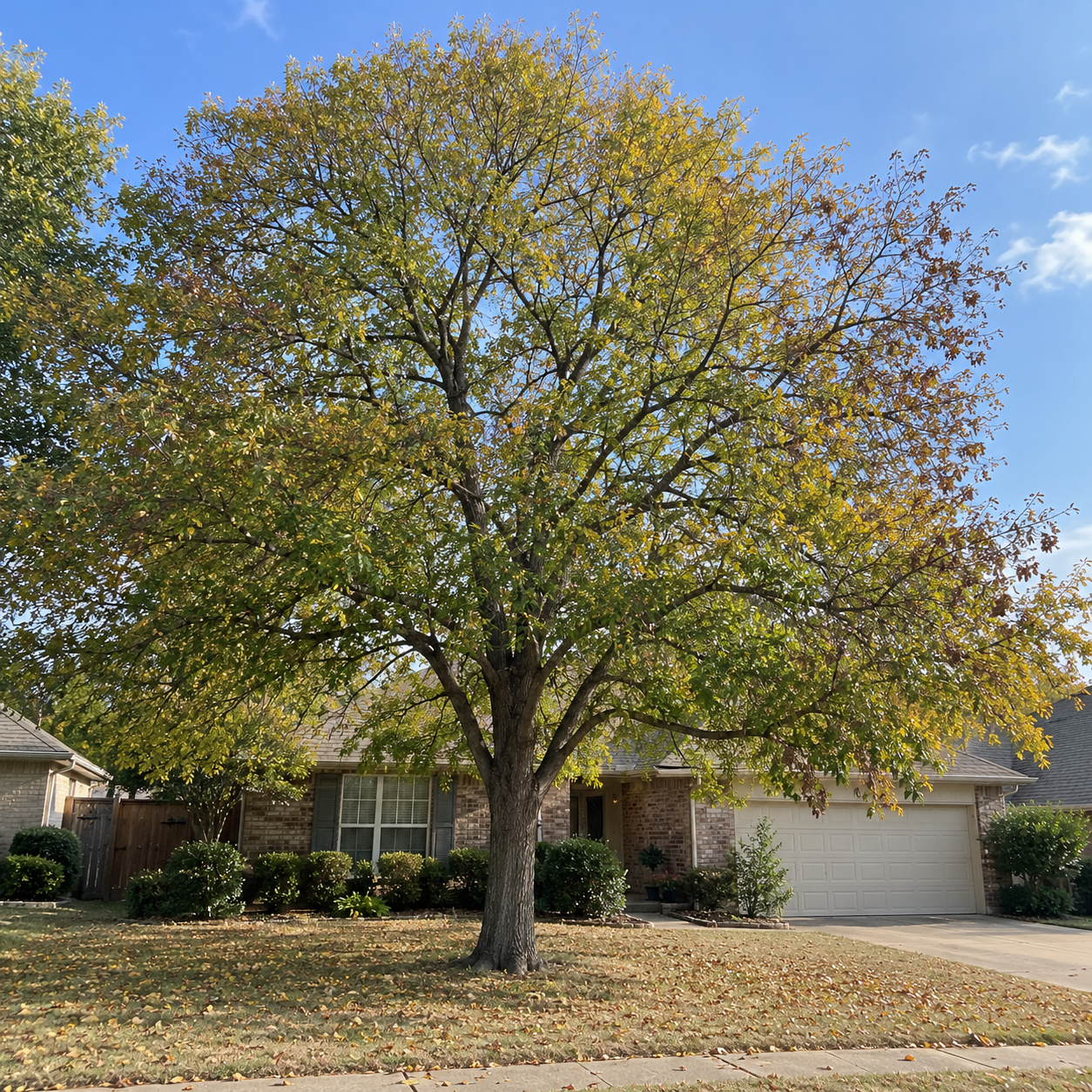
For homeowners in Plano, Frisco, Allen, McKinney, and surrounding communities, leaf loss can be confusing. Many trees naturally shed leaves as the days shorten. Others drop foliage ahead of schedule after hot weather, dry soil, or changes around their roots.
The important distinction is this: falling leaves are a symptom, not a diagnosis. Understanding the tree species, timing, pattern of leaf loss, and condition of the branches helps determine whether the change is seasonal or needs attention.
Why Do Trees Lose Their Leaves in the Fall?
As daylight hours shorten and temperatures begin to change, many deciduous trees prepare for winter by slowing their growth and shedding their leaves.
This natural process reduces water loss during the dormant season.
North Texas trees such as cedar elms and several red oak species commonly shed their foliage in fall. Their leaves may turn yellow, orange, red, or brown before dropping.
However, not every species follows the same schedule.
Bald cypress, despite its evergreen-like appearance, is a deciduous conifer that naturally loses its feathery foliage in the fall.
Live oaks, by contrast, typically shed older leaves in late winter or spring as new growth emerges.
Knowing your tree species is an important first step in determining whether leaf loss is normal.
When Falling Leaves May Signal a Problem
North Texas trees endure challenging growing conditions throughout the year, particularly during the summer months.
Extended heat, inconsistent rainfall, compacted soils, and changes around the root system can affect a tree's ability to absorb water and maintain healthy foliage.
When a tree experiences significant stress, it may begin shedding leaves earlier than expected.
In a September 17, 2026 report , the Texas A&M Forest Service explained that prolonged drought and extreme heat can cause some Texas hardwood trees to enter premature dormancy.
This response can help conserve moisture, but early leaf loss can also accompany more serious problems.
Important: Premature leaf drop does not automatically mean a tree is dying. However, it also does not guarantee that the tree is healthy. Additional symptoms and growing conditions must be considered.
1. Heat and Drought Stress
After prolonged high temperatures or limited rainfall, trees may struggle to maintain adequate moisture throughout their canopy.
Common symptoms include:
- Leaves turning yellow or brown earlier than expected
- Browning or scorched leaf edges
- Wilting foliage
- Thinning canopies
- Premature leaf drop
In some cases, shedding leaves helps reduce moisture loss. However, repeated or prolonged drought stress can weaken a tree and affect its ability to recover.
According to the Texas A&M Forest Service , severe drought can damage the fine feeder roots trees rely on to absorb water and nutrients.
2. Root Damage and Soil Compaction
What happens below ground often determines what we see above it.
Tree roots require oxygen, moisture, and adequate growing space. Construction activity, heavy equipment, changes in drainage, and compacted soil can interfere with these essential conditions.
When roots are damaged or unable to function properly, portions of the canopy may begin showing signs of stress.
A tree losing leaves on one side, developing smaller foliage, or experiencing branch dieback may be responding to problems within its root system.
These symptoms can also have other causes, which is why examining the surrounding environment is important.
3. Excessive Moisture and Drainage Problems
Although North Texas is well known for summer heat, too much water can also damage tree roots.
Poor drainage, prolonged saturated soil, and improperly adjusted irrigation systems can limit oxygen availability in the root zone.
The resulting symptoms may resemble drought stress, including yellowing leaves, canopy thinning, and premature leaf loss.
This is one reason adding more water isn't always the right solution.
4. Insects, Disease, and Other Environmental Stressors
Insects and diseases can contribute to leaf discoloration and early leaf drop.
However, these problems often occur alongside other environmental conditions.
A tree weakened by drought, root disturbances, or repeated stress may become more vulnerable to certain pests and diseases.
Treating the visible symptom without identifying the underlying cause may do little to improve the tree's long-term health.
Five Things Homeowners Should Watch For
A few simple observations can help determine whether your tree needs closer attention.
1. Is the Leaf Loss Happening Earlier Than Usual?
Consider the species and its normal seasonal cycle. A tree dropping leaves much earlier than expected may be experiencing stress.
2. Is the Entire Canopy Changing, or Just One Section?
Seasonal changes often occur across much of a deciduous tree's canopy.
Unusual thinning or dieback concentrated in one area deserves additional attention.
3. Are the Leaves Changing Color Naturally?
Dry, scorched edges, unusual spotting, and rapid discoloration can provide useful clues, although no single leaf symptom establishes a diagnosis.
4. Are Branches Declining Along With the Leaves?
Bare branches in fall may be completely normal. However, brittle twigs, dying limbs, cracked branches, and unusual canopy dieback may indicate more significant concerns.
5. Has Anything Changed Around the Tree?
Recent construction, trenching, changes to irrigation, heavy equipment traffic, or soil placed over the root zone can affect tree health.
Understanding these changes can help identify what may be contributing to the problem.
What Should You Do If Your Tree Is Losing Leaves Early?
The best response depends on what's causing the leaf loss.
Start by observing the tree and its growing conditions rather than assuming immediate treatment is necessary.
If the soil is dry and the tree needs supplemental moisture, slow, deep watering may help. Avoid overwatering, particularly in poorly drained areas, and follow local watering restrictions.
Maintaining a 2- to 3-inch layer of organic mulch over the root zone can help conserve soil moisture and moderate soil temperatures. Keep the mulch away from direct contact with the trunk.
Avoid unnecessary heavy pruning or automatically applying fertilizer to a stressed tree. These actions may introduce additional stress rather than solve the underlying problem.
Sometimes, the appropriate response is simply to monitor the tree through its normal seasonal cycle.
Other situations may require professional evaluation, soil management, or targeted Plant Health Care .
The goal isn't to treat every tree that loses leaves. It's to understand why the leaves are falling and respond appropriately.
Fall Is an Opportunity to See What Summer May Have Hidden
As trees begin losing their foliage, their branch structure becomes easier to see.
This makes fall a useful time to observe conditions that may have been difficult to notice beneath a full summer canopy.
Look for crossing branches, cracked limbs, broken attachments, unusual canopy imbalances, and areas of deadwood.
Not every visible irregularity requires corrective pruning. However, large damaged limbs or branches that threaten buildings, sidewalks, or other occupied areas deserve prompt professional attention.
For a more detailed seasonal inspection, review our North Texas Fall Tree Checklist .
If structural pruning is needed, learn more about our professional tree trimming and pruning services .
Routine seasonal observation can help property owners identify changes over time and make informed decisions about future tree care.
When Should You Contact a Certified Arborist?
If your tree is losing leaves significantly earlier than expected, showing progressive canopy decline, or developing dead branches along with foliage loss, a professional tree assessment is a sensible next step.
An ISA Certified Arborist can evaluate the species, foliage, branch condition, root environment, and other site factors to help determine what may be affecting the tree.
Some conditions may require intervention, while others may improve with adjustments to routine care or seasonal monitoring.
At Plano Tree Care Inc., we've served North Texas property owners for over 30 years, helping protect and maintain the trees that contribute to the beauty, comfort, and value of our communities.
Our team provides professional tree evaluations and plant health care recommendations based on each tree's condition and surrounding environment.
Common Questions About Fall Leaf Drop
Does Early Leaf Drop Mean My Tree Is Dying?
No. Drought-stressed trees sometimes shed leaves or enter dormancy early. However, leaf loss can also accompany serious decline.
The tree's branches, roots, site conditions, and changes over time help determine whether professional attention is warranted.
Will the Leaves Come Back After I Water the Tree?
Leaves that have already turned brown or fallen will not necessarily recover or be replaced immediately.
If the tree survives, renewed growth may not occur until the normal spring growing season. Recovery depends on the severity and duration of stress.
Should I Fertilize a Tree That Looks Thin?
Not automatically.
Fertilizer does not correct drought, poor drainage, or damaged roots. Identify the cause of stress before deciding whether nutrient management is necessary.
Healthy Trees Begin With Understanding What They Need
Falling leaves are part of nature, but they can also reveal how a tree has responded to the conditions around it.
The key is recognizing when seasonal changes are normal and when they warrant a closer look.
Whether your tree is simply entering dormancy or responding to environmental stress, understanding the difference allows you to make better decisions about its care.
Concerned About Unusual Leaf Loss?
A thinning canopy isn't always an emergency, but it shouldn't be ignored when other symptoms appear.
Plano Tree Care can help you understand what's happening and what, if anything, your tree needs next.
Serving Plano, Frisco, Allen, McKinney, and surrounding North Texas communities.