Palm Boot Removal in North Texas: Why Precision Matters
Palm boot removal can give a palm trunk a cleaner, more finished appearance by carefully removing old, dried leaf bases.
But this is one tree-care job where appearance should never come before the health of the palm.
Those old leaf bases, commonly called boots, can remain attached to the trunks of some palm species after the fronds have died or been removed. Removing those old boots is sometimes called debooting. You may also hear the terms skinning or shaving used when discussing palm trunk grooming.
Whatever term is used, the goal should never be to cut or scrape away as much material as possible. The goal is to carefully remove dry material that is ready to come off while protecting the living trunk underneath.
The important word is carefully.
Palms Respond Differently to Trunk Damage
A palm is not built like an oak, elm, or other traditional hardwood tree.
Palms do not have the same secondary cambium found in traditional woody trees. That difference matters because wounds in a palm trunk do not close over the same way they can on many hardwood trees.
According to the University of Arizona Cooperative Extension , palms lack secondary cambium, meaning wounds can remain visible throughout the life of the palm.
That makes precision especially important during palm boot removal. Cutting, scraping, or shaving too deeply can damage the pseudobark, cortex, or deeper trunk tissue.
University of Arizona guidance also cautions that aggressive peeling or skinning of palm trunks is generally unnecessary and can create wounds that increase the risk of disease.
Palm Boot Removal Is Precision Work
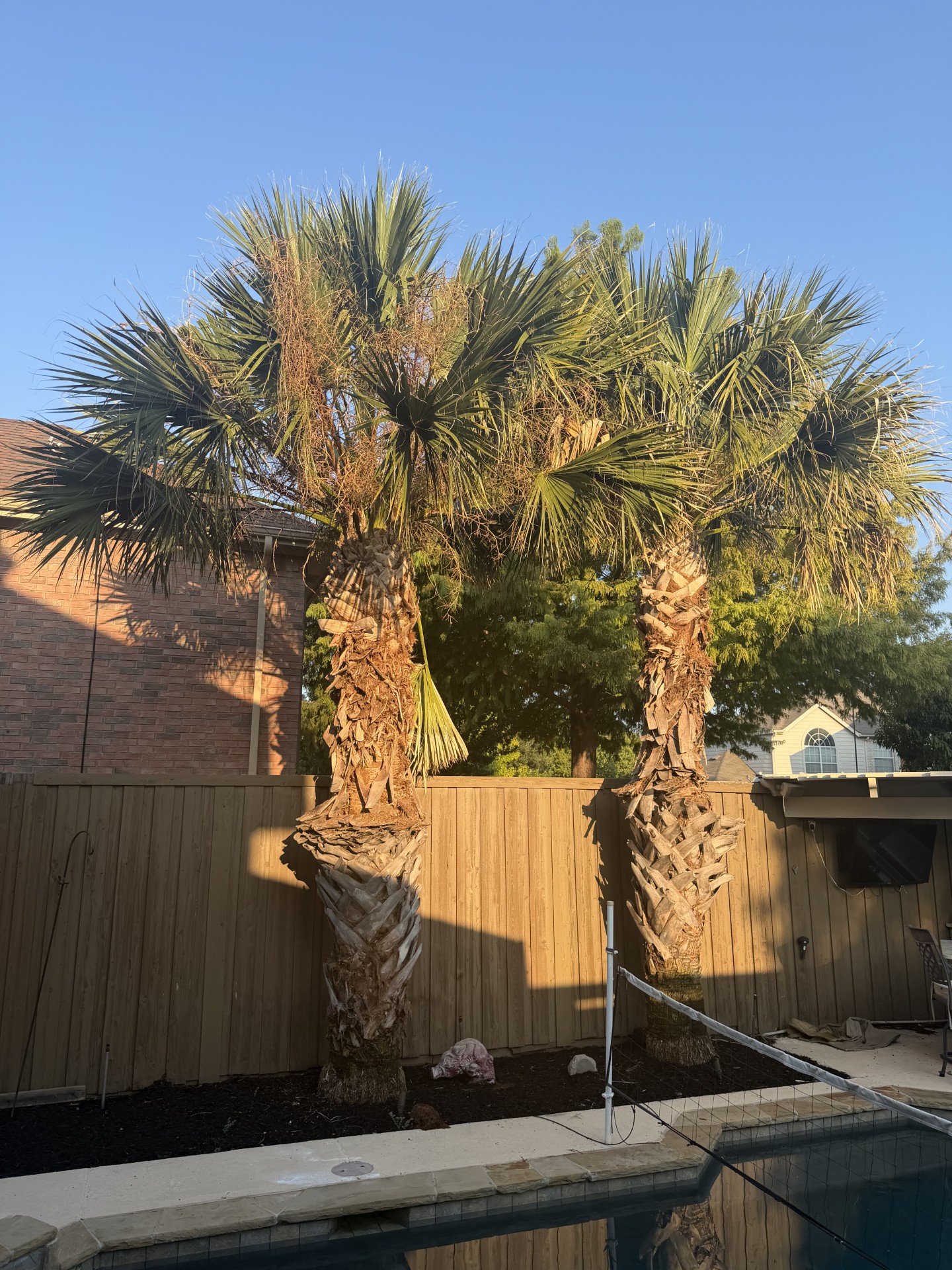
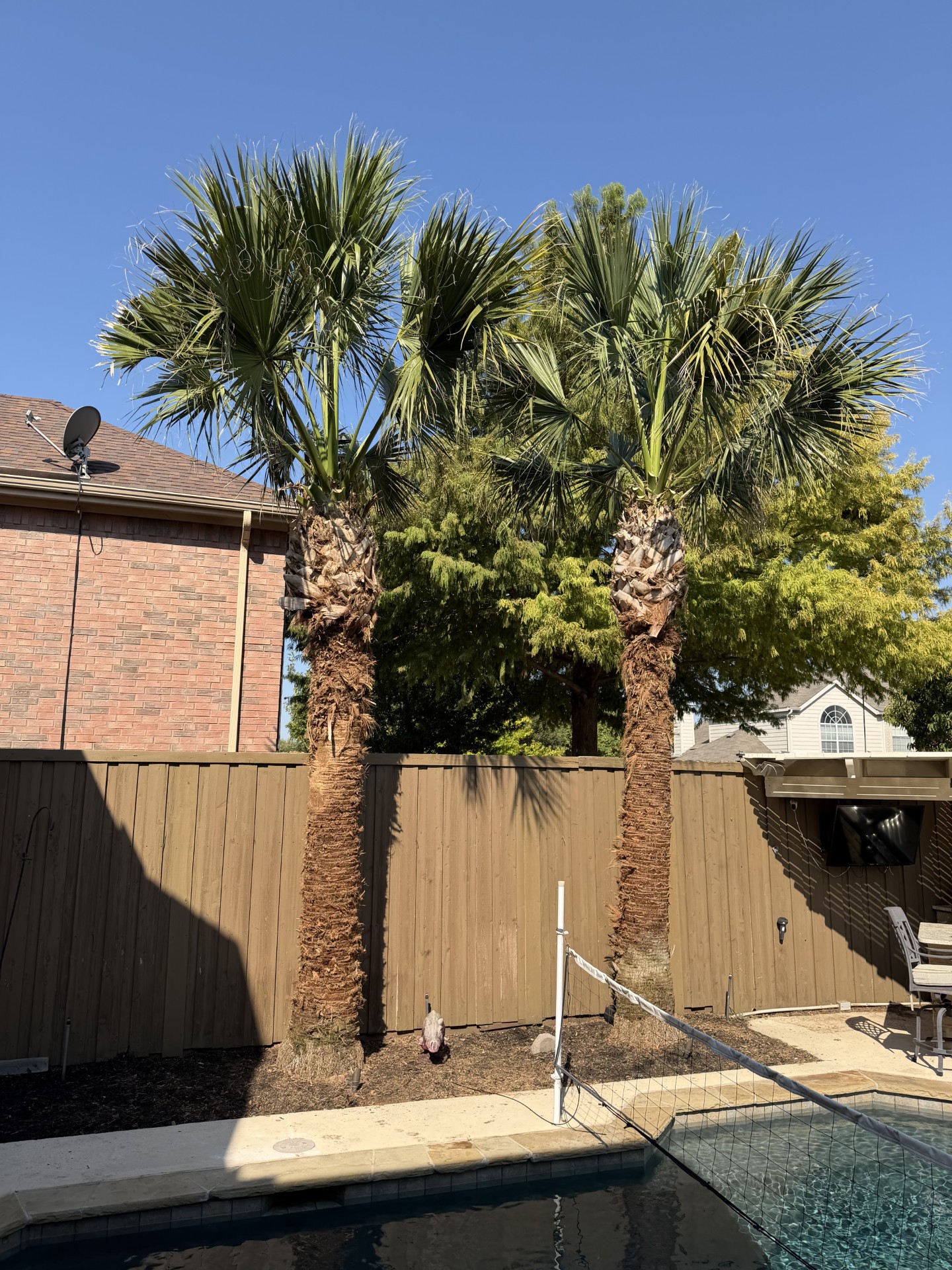
For this project, the Plano Tree Care crew carefully removed the old boots from the lower portions of the palms using a razor knife.
This is not a job where faster is better.
Each section has to be evaluated individually. Some old material may separate relatively easily. Other sections may still be firmly attached and require much more care.
The goal is to remove the old, dry material without scraping, gouging, or cutting into healthy palm tissue underneath.
UF/IFAS Extension notes that firmly attached leaf bases may be left in place to help prevent trunk scarring during debooting. Damage to the trunk can make a palm more susceptible to insect and disease problems.
That is why taking your time and being precise with each cut matters.
Knowing When to Stop During Palm Boot Removal
One of the biggest mistakes that can be made during palm maintenance is trying to make the trunk look too perfect.
If removing another layer requires cutting into healthy tissue, that material should stay in place.
Professional tree care is not about forcing every tree into a particular appearance. It is about understanding the biology of the plant and working within those limits.
With palm boot removal, restraint can be just as important as the cutting itself.
Cold Weather Makes Timing Important in North Texas
Timing deserves special consideration when palms are growing in North Texas.
Freezing temperatures can place considerable stress on cold-sensitive palms. For that reason, detailed pruning and trunk grooming should be approached carefully when another freeze may still be possible.
University of Arizona Cooperative Extension recommends waiting until the risk of additional cold injury has passed before removing palm fronds damaged by freezing temperatures.
UF/IFAS guidance on cold damage in palms similarly recommends leaving cold-damaged foliage in place until the threat of additional cold weather has passed because even dead leaves may provide some insulation to the palm's growing point.
While palm boot removal is different from removing cold-damaged fronds, the same basic principle supports being cautious about unnecessary palm work immediately before severe cold.
There is a simple way to think about it.
You probably would not take off your winter jacket, walk outside into freezing temperatures, and expect your body not to notice.
The same idea applies to palm maintenance. Avoid removing protective material or creating unnecessary wounds when the palm may soon be dealing with significant cold stress.
Palm Maintenance Should Be Deliberate
Palms create a distinctive look in a North Texas landscape, but they also require a different maintenance approach than traditional hardwood trees.
Palm boot removal can improve the appearance of certain palms when the material is dry and ready to be removed. But the finished appearance should always be secondary to protecting the trunk underneath.
The process comes down to three important principles:
- Know what material can safely be removed.
- Take your time with every cut.
- Never sacrifice healthy palm tissue simply to create a smoother-looking trunk.
Good tree care is not measured by how much material you can remove.
Sometimes it is measured by knowing exactly where to stop.
Need Help With Palms or Other Trees on Your Property?
If you have palms on your North Texas property and are unsure what material should be removed, when maintenance should be performed, or whether the trunk has already been damaged, a professional evaluation can help determine the appropriate next step.
Learn more about Plano Tree Care's professional tree services and professional tree pruning and trimming .
Request a Tree EvaluationSources & Further Reading
University of Arizona Cooperative Extension: Arizona Landscape Palms and Their Management
UF/IFAS Extension: Pruning Palms
UF/IFAS Extension: Regenerated Sabal/Cabbage Palms: Why and How
UF/IFAS Extension: Cold Damage on Palms